When William P. Israel decided to sell the Mansion and become an Adventist minister, he had little trouble finding a buyer for the property. The Bostonian John Templeman Coolidge III was quick to purchase the house as a summer home for his growing family.
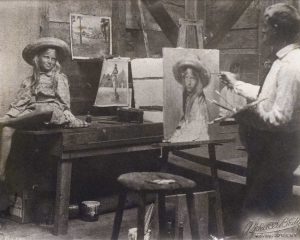
John Templeman Coolidge III was born into a wealthy Boston family in 1856. Graduating from Harvard in 1879, he married Katherine Parkman, daughter of the distinguished historian Francis Parkman. The young Coolidges traveled to Paris where they spent the next five years while Coolidge studied painting. Two daughters, Mary and Katherine, were born during this time. When they returned to Boston in 1886, a third daughter, Louise, was born, and the Coolidges bought the Wentworth Mansion. This was at the height of the Colonial Revival movement, and the quirky house and its legends held great appeal for both the Coolidges and Francis Parkman, who spent several summers in the house. The house was in need of repair when Coolidge bought it, and he devoted the next four decades in restoring and adding to the house. Two more children, Elizabeth and John (Jack) were born before Katherine Parkman died in 1900. Coolidge remarried in 1913 to Mary Abigail Parsons, and two sons, Henry and Usher, completed the family. The house in the summer was filled with family and visiting friends, but the Coolidges continued the custom of allowing visitors to see the old part of the house. The children often acted as guides and cheerfully embellished the stories of the Wentworths and the house.
A longtime trustee of the Museum of Fine Arts, Boston, Coolidge was instrumental in the addition of early American fine and decorative arts to its collection. About 1920 he added a guest wing to the north end of the Mansion, which was composed of a living room, bedroom, and a bath. In both the living room and bedroom he installed paneling and mantelpieces which undoubtedly were found in Portsmouth since at that time many houses in the city were being demolished and their woodwork sold. He also added a wing with rooms for his servants on west end.
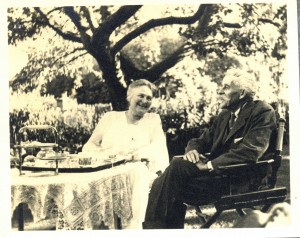
Coolidge died in 1945, and his widow eventually decided to give up the house. In 1954 she gave the house and a few acres to the State of New Hampshire, and over the next few years she gave more land until the State received all the property which encompasses the park today.